
I see click here as an arcade-style casino game, not a traditional slot. Still, plenty of UK players search for “Chicken Road slot biggest wins”. The name is deceptive, but in a helpful way: there are no reels, rows, or paylines to check. A chicken advances across lanes while traffic jeopardizes each step, and the multiplier climbs until I cash out or get hit. That distinction changes how I consider every claim about a record win.
What Chicken Road Is and Why exactly Its Wins Are Distinct
Chicken Road is a unique casino game focused on a road-crossing theme. I pick a stake, move the chicken forward lane by lane, and observe the potential return increase. Every completed step increases the multiplier, but each new lane adds more risk because traffic can stop the round. The appeal isn’t spinning symbols; it’s deciding when to stop before the chicken gets hit.

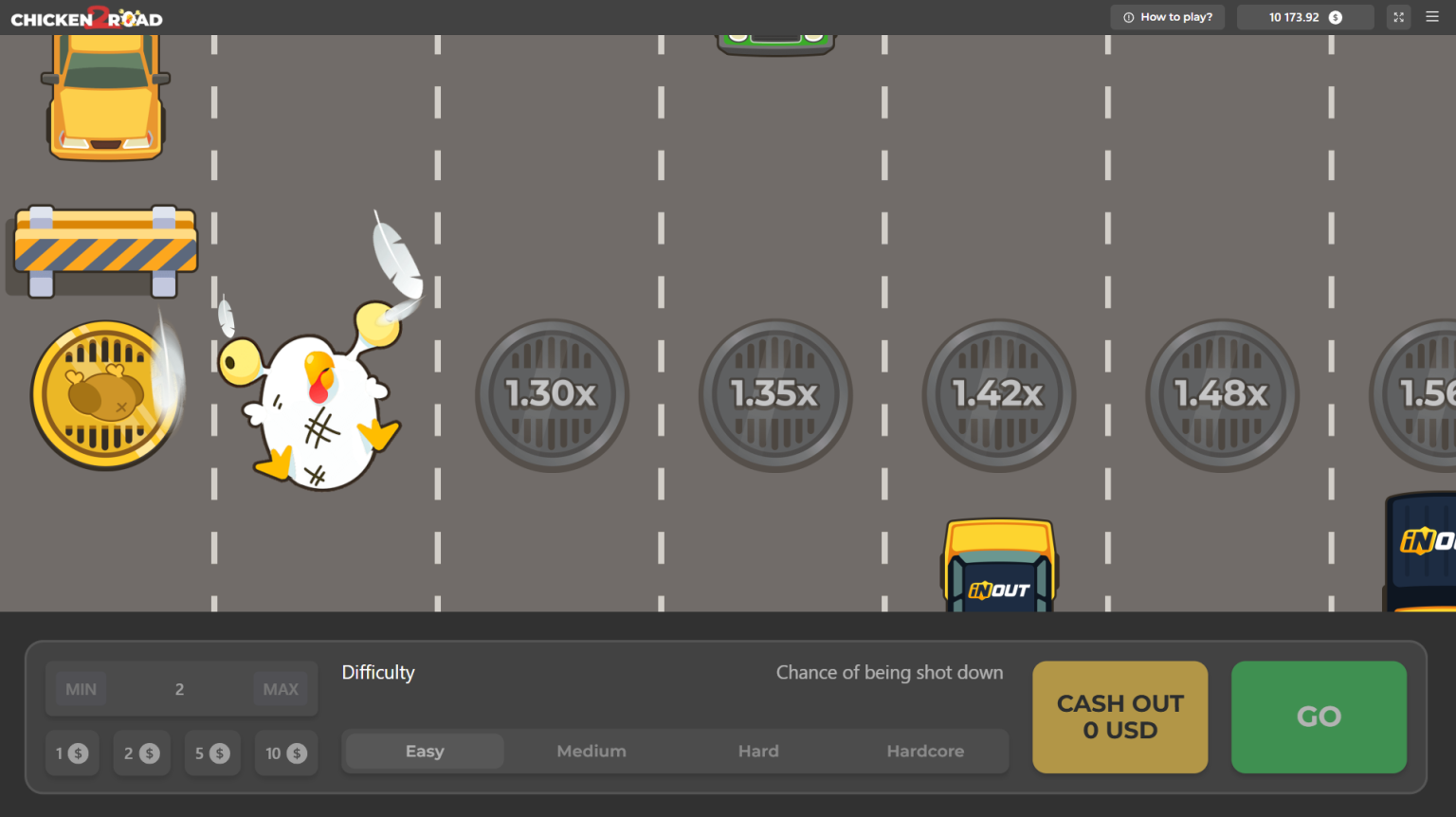
InOut Games produces it, and I’d call it a crash-style or instant-win title, not a reel-based slot. That matters because the typical slot terms don’t apply. There are no reels, rows, paylines, wilds, scatters, or free spins in the regular version. The multiplier ladder is the core mechanic, and the cash-out decision is the key skill-like element.
When people ask about the biggest Chicken Road wins recorded, I explain to them a win is the stake multiplied by the cash-out point. A £1 stake cashed out at 50x yields £50, while a 10p stake at 500x also yields £50. So a headline multiplier can look huge while the true cash amount is modest. I always differentiate the multiplier size from the money won.
Stake Range, Top Payout and What Defines a Large Chicken Road Win
Stake ranges in Chicken Road-style games often start at low stakes, usually around 10p or equivalent, and go up to a limit set by the edition I’m playing. I examine the stake selector before commencing because the lowest and highest can differ between builds. A sensible UK player should treat the maximum stake as a limit, not a target, notably in a high-variance game.
The maximum win is normally expressed as a multiplier cap in the game rules. I search for that cap before going after a large target because it indicates to me whether an ambitious cash-out is even possible. There’s no fixed or increasing jackpot in the basic game, as I see it; the highest payout comes from the multiplier ladder and the relevant cap, not from a different jackpot pool.
For me, a big win has two dimensions: the multiplier reached and the cash amount returned. A 200x cash-out on a £1 stake is £200, while a 50x cash-out on a £10 stake is £500. The next is the larger cash win although the multiplier is lower. I use that difference whenever I encounter a title about the largest Chicken Road wins recorded.
RTP, Volatility and the Calculations Behind Recorded Wins
Výplatní poměr, or return to player, is the extended theoretical proportion paid back to players over countless rounds. I check the game’s own info panel because Chicken Road versions can change, and I avoid using a general figure taken from another page. The RTP reveals about the house edge over time, not what will occur in my next session or in any particular recorded win.
Volatility is elevated in real terms because one mistimed step can wipe out the round. I don’t see Chicken Road as a low-volatility grind with regular small returns. The game compensates players who cash out early with more modest multipliers, while players pursuing large multipliers take on a greater chance of forfeiting the stake. That risk profile clarifies why big wins stick in the memory but are uncommon.
The maths also impacts how I interpret win claims. A 1,000x screenshot isn’t automatically more impressive than a 100x screenshot if the stakes are not the same. I evaluate the cash return, the stake, the cash-out multiplier, and the maximum payout cap shown in the game rules. Without those details, a “record” claim is only a narrative, not a verified result.
Bonus Rounds and Multiplier Effects: What Can Elevate a Session Higher
Chicken Road does not include free spins, wild symbols, scatter symbols, or paylines in the standard version. I mention that clearly because players arriving from slot searches may expect a bonus round. The multiplier ladder is the feature that matters: every lane cleared boosts the potential return, and the cash-out button turns that potential into a real result.
Some builds may include usability options like auto-cash-out settings, sound controls, or turbo-style pacing. I consider those as tools, not bonus features. Auto-cash-out can aid me follow a target without emotion, but it doesn’t change the underlying risk. I still have to grasp the stake, the multiplier target, and the maximum payout cap.
Because there are no free spins or wilds to trigger, the game’s excitement is concentrated in the decision to continue or stop. I believe that simpler than a slot bonus round because I can view the current multiplier and pick my exit. The trade-off is that there’s no separate feature to save a bad round; discipline counts more than chasing a trigger.
How to Start Chicken Road across the UK and Record Your Own Wins
For UK readers, I’d begin by confirming that I’m 18 or over and participating through a licensed provider. I then access the game’s information panel to check the stake range, RTP, maximum win cap, and any version-specific rules. If a demo mode is available, I utilize it first to understand the pace without risking money.
To play, I select my stake, initiate the round, and follow the chicken move. I determine my cash-out target before the round commences, because adjusting it mid-round is where emotion slips in. If I achieve my target, I cash out. If I fall short, I quit rather than increasing the stake to recoup. That method maintains the game within my budget and keeps my own results easier to assess.
I track my sessions with simple notes: stake, cash-out multiplier, cash paid back, and whether I used a target. Over time, that log displays my real results better than memory. It also helps me compare my wins with online claims, because I can notice how often a high multiplier actually shows up and how much cash it produced at my stake size.
How the Game Plays: Tracks, Multipliers and Withdrawing
I first pick a wager that matches my funds, then launch the round. The chicken advances on its own or incrementally, according to the version and settings. Each lane cleared pushes the multiplier higher. At any point before a crash, I can collect and secure the existing winnings. If a car hits the chicken, the round ends and the wager is forfeited.
The excitement grows because further tracks provide higher multipliers but also greater exposure. I think of it as a risk ladder: early cash-outs are more likely to succeed but give lower payouts, while ambitious targets mean surviving more traffic. There’s no payline pattern to learn and no symbol stats to monitor, so I focus on stake size, goal multiplier, and the amount I can afford to lose.
A straightforward case clarifies the numbers. If I stake £2 and collect at 25x, I get £50 before any rules are applied. If I hold out for 100x, the maximum winnings is £200, but the probability of reaching it is lower. I never treat a big multiplier as a promise; it’s an aim that only pays out when I hit withdraw.
Largest Wins Recorded: What Public Evidence Shows and How to Interpret Claims
I have yet to discovered a sole official public leaderboard for Chicken Road wins that I can point to as definitive. Most “biggest win” claims come from player screenshots, video clips, or affiliate posts. That never make them false, but it means I regard them as unverified save when the stake, multiplier, cash return, and game version are all shown and coherent.
A trustworthy claim should show the cash-out multiplier and the stake, not merely a substantial number on screen. I also check whether the return exceeds the maximum win cap stated in the game rules; if it does, the claim needs explaining. I look for the game name, the provider, and the date, as different builds or rule sets can modify what a result represents.
I also recall that a record multiplier is not the identical as a record cash win. A player who collects at 1,000x on a 10p stake wins £100, whereas a player who cashes out at 100x on a £10 stake wins £1,000. When I contrast claims, I change everything to cash at the declared stake so the comparison is equitable.
My realistic approach is to enjoy the stories excluding treating them as targets. Chicken Road is a high-risk game, and pursuing a screenshot-sized multiplier is a rapid way to lose perspective. I establish a budget, use a cash-out target, and cease when the session is done. That’s more beneficial to me than any unverified record claim.